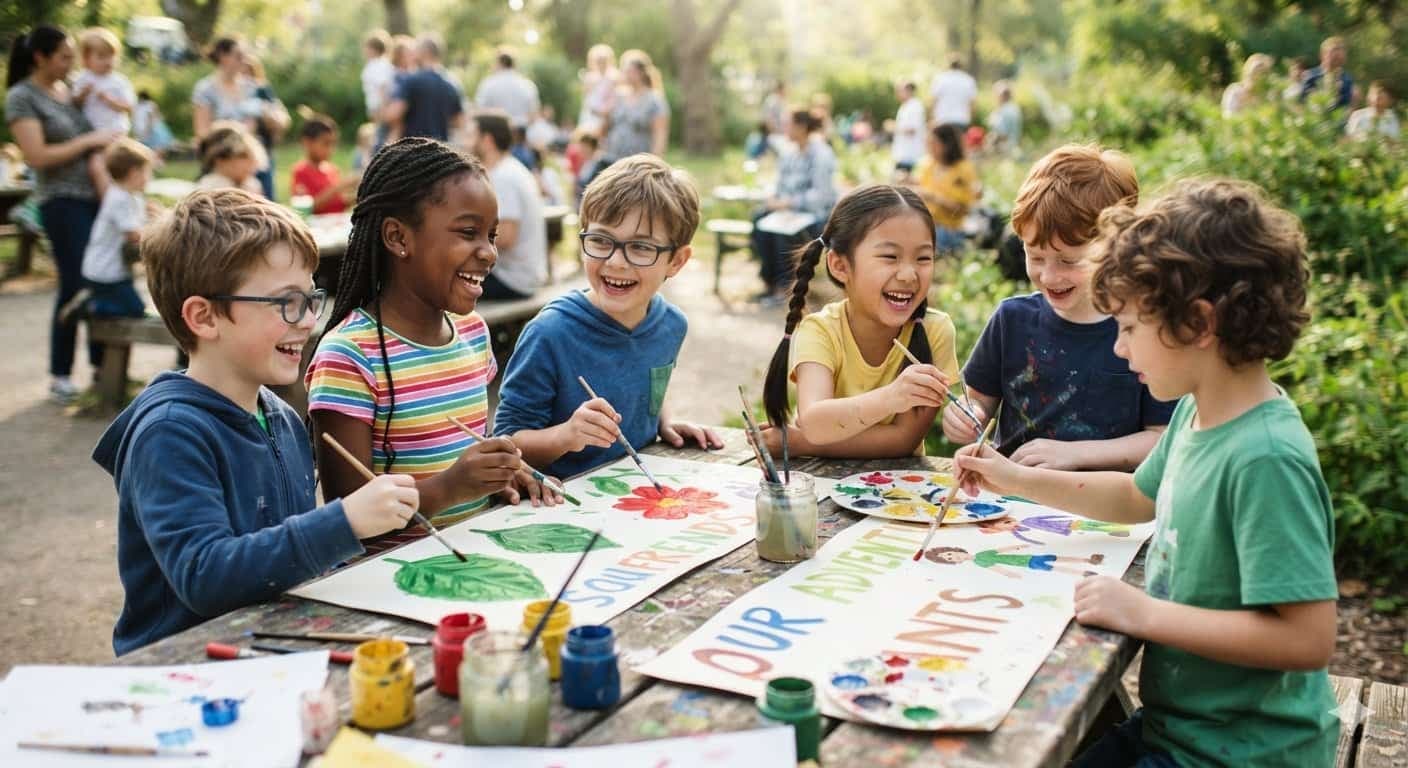
How to Help Your Child Make Friends Through Activities

Finding good friends can be just as stressful for kids as it is for adults. You see your child wanting to join in, but not always knowing how. Activities, clubs, and camps can quietly do a lot of the heavy lifting by giving children shared interests, routines, and chances to practice social skills in a low-pressure way.
This guide walks through how to help your child make friends at different ages using the right activities, and how to turn that into realistic next steps you can take today.
Why activities make it easier for kids to make friends
Structured activities give kids a built-in reason to be together, which lowers the pressure of “what do I say” or “how do I join.” Instead of starting from small talk, they start from a shared goal, like building a robot, learning a dance, or scoring a goal.
When children see the same peers regularly, they get repeated chances to say hello, sit nearby, and slowly move from parallel play to true friendship. That routine matters for shy or anxious kids who need time to warm up. It also helps kids practice turn-taking, problem-solving, and handling disappointment, all inside a supervised setting where adults can guide them if needed.

Making friends activities for preschoolers
Preschoolers often make friends through play more than conversation, so the best activities focus on doing something side by side. At this age, kids are learning how to share space and toys, wait for a turn, and notice others’ feelings.
Play-based group classes are especially helpful. Options like toddler gymnastics, music and movement, art classes, and nature play groups let children move, explore, and copy each other without pressure to hold long conversations. Short, predictable routines at the start and end of class also give kids familiar moments to say hello and goodbye to the same faces each week.
For very young children who are hesitant, smaller settings work better. A small-group storytime, a parent-child class, or a short weekly playgroup helps them feel safe enough to explore, while still having you nearby. You can gradually step back as your child becomes more comfortable staying with peers and instructors.
If you want to put this into practice, look for local preschool-friendly programs with small group sizes and lots of hands-on play. On BeAKid, you can filter by age and category to find gentle, play-based activities near you that naturally support early friendships.

Activities to help students make friends in elementary school
Once kids start school, friendships are often shaped by what they enjoy doing. Activities that give students a shared purpose make it easier to move beyond classroom small talk and into real connection.
After-school clubs are powerful here. Options like chess club, science club, coding, Lego building, drama, or art give children reasons to collaborate. Projects and performances create chances for kids to pair up, share materials, and cheer each other on. For kids who are not drawn to sports, interest-based clubs can be their best path to meeting peers who “get” them.
Team and individual sports also support friendships when the environment is positive and inclusive. Recreational soccer, basketball, martial arts, or swimming lessons let kids bond over practices, games, and shared challenges. Coaches who emphasize encouragement and effort help kids feel like part of a group, not just judged on performance.
Some students need quiet spaces to connect. Book clubs, robotics, board-game meetups, or creative writing workshops give more reserved kids time to talk at their own pace. These settings reward focus and curiosity, which can be especially encouraging for children who feel overlooked in louder environments.
You can use BeAKid to scan after-school choices in your area, from sports to STEM, and see which schedules line up with your family’s routine. Activities that meet weekly during the school year often give enough time for real friendships to grow.

Activities to help teens make friends
Teen friendships are shaped by identity, independence, and a growing sense of what matters to them. Activities that let teens express themselves and contribute to something larger often feel more meaningful than general social events.
Interest-focused programs are especially valuable. Theater, music ensembles, coding camps, debate, creative writing workshops, advanced art classes, or fitness groups connect teens who share specific passions. Long-term projects, performances, or competitions create built-in reasons to spend time together outside of class and practice.
Leadership and service can also open doors. Youth councils, volunteer programs, mentoring younger kids, or environmental clubs allow teens to meet peers who care about similar issues. These activities build both friendships and a sense of purpose, which is helpful for teens who feel disconnected in typical social scenes.
Some teens are searching for safer, more structured places to socialize. Game design meetups, e-sports clubs, photography walks, or outdoor adventure programs offer contact with peers in environments that feel less risky than large parties or unstructured hangouts. Having clear start and end times and consistent adult presence can be reassuring to both teens and parents.
On BeAKid, you can help your teen browse options that match their interests and schedule, then decide together which programs feel like the right environment for meeting new people. Letting your teen help choose increases the chances they will show up, stay engaged, and invest in the relationships they build there.
[IMAGE PLACEHOLDER: Teens working together backstage at a theater program, focused and joking comfortably]
Helping kids who struggle with making friends
Some children want friends but find social situations confusing or exhausting. Activities can still help, but they may need extra support while they learn how to connect.
Smaller, more structured groups reduce the noise and chaos that can overwhelm kids who are shy, anxious, or neurodivergent. Programs that clearly explain rules, routines, and expectations help children understand what will happen and how to participate. Instructors who break tasks into steps and model social skills make it easier for kids to join in.
Clear roles also make it easier to connect. In activities where each child has a specific job or position, kids know where they fit and how to contribute. This can be true in team sports, robotics teams, ensembles, or project-based classes where everyone is responsible for a defined part.
Some programs explicitly teach social skills through games, role-play, or collaborative challenges. These can be especially helpful if your child needs practice with reading cues, sharing, or managing frustration. When those skills are practiced in an activity they enjoy, kids tend to absorb them more easily.
If your child often comes home upset after social situations, consider activities where you can talk with the instructor about your child’s needs ahead of time. Many providers on BeAKid include notes on group size, instructor approach, and accommodations, so you can look for environments where your child is likely to feel understood and supported.
Choosing the right activity to support friendships
Not every activity will be a good fit for every child, even if it looks great on paper. Thinking carefully about fit can prevent frustration for both you and your child.
Start with what your child already enjoys. If they are drawn to drawing, animals, building, or stories, look for programs that center those interests. When kids are genuinely curious about what they are doing, they are more willing to push past social discomfort and stick with a program long enough to make friends.
Next, consider group size and structure. Some children thrive in energetic, large-group environments; others do best in small, predictable groups where they recognize the same faces each time. Read program descriptions closely and, when possible, ask providers clarifying questions about what a typical day or session looks like.
Finally, think about logistics. Even the best activity will not help if it constantly conflicts with family routines or leaves everyone rushed and stressed. On a platform like BeAKid, you can narrow results by days, times, and location so you are only choosing from options that actually fit your schedule.

FAQ
What activities can help a child make friends if they are very shy?
Look for calm, small-group activities where participation is guided and predictable. Art, Lego building, story-based clubs, and low-key sports or movement classes with encouraging instructors are often easier starting points than large, competitive teams or loud events. Programs that repeat weekly with the same group give shy children time to warm up to familiar faces.
How can children find new friends through activities if they already have a busy school day?
Focus on one or two well-chosen activities each season rather than stacking their schedule. After-school clubs that meet once a week, weekend classes, or short session-based programs can provide enough social contact without overwhelming them. Choosing something they are excited about increases the social value of the time they spend there.
Are extracurricular activities really important for social development?
Extracurriculars offer practice in listening, sharing, resolving disagreements, and working toward a shared goal. Those experiences are different from classroom work and home life, and they let kids learn how to interact with a wider range of peers. Over time, that practice can strengthen confidence, empathy, and communication skills.
What if my child tries an activity to make friends and does not like it?
Switching is normal. If an activity consistently leaves your child drained or upset, it is reasonable to look for a better fit. Talk briefly about what did not feel right and what they might like more, then try a different format, group size, or subject. Keeping at least one consistent activity through the season, if possible, still helps them experience follow-through and see friendships grow over time.
Conclusion
Activities do not magically solve friendship challenges, but they create the structure and shared purpose that make friendships easier to start and easier to sustain. When kids spend time doing something they care about with the same small group of peers, trust and connection can develop one interaction at a time.
You know your child best, so start from their interests, energy level, and comfort zone. Then look for local programs that match who they are now, not who you think they “should” be. When you are ready to explore specific options, you can use BeAKid to browse nearby activities, compare details, and register in just a few steps, so your child can step into new experiences with support behind them.