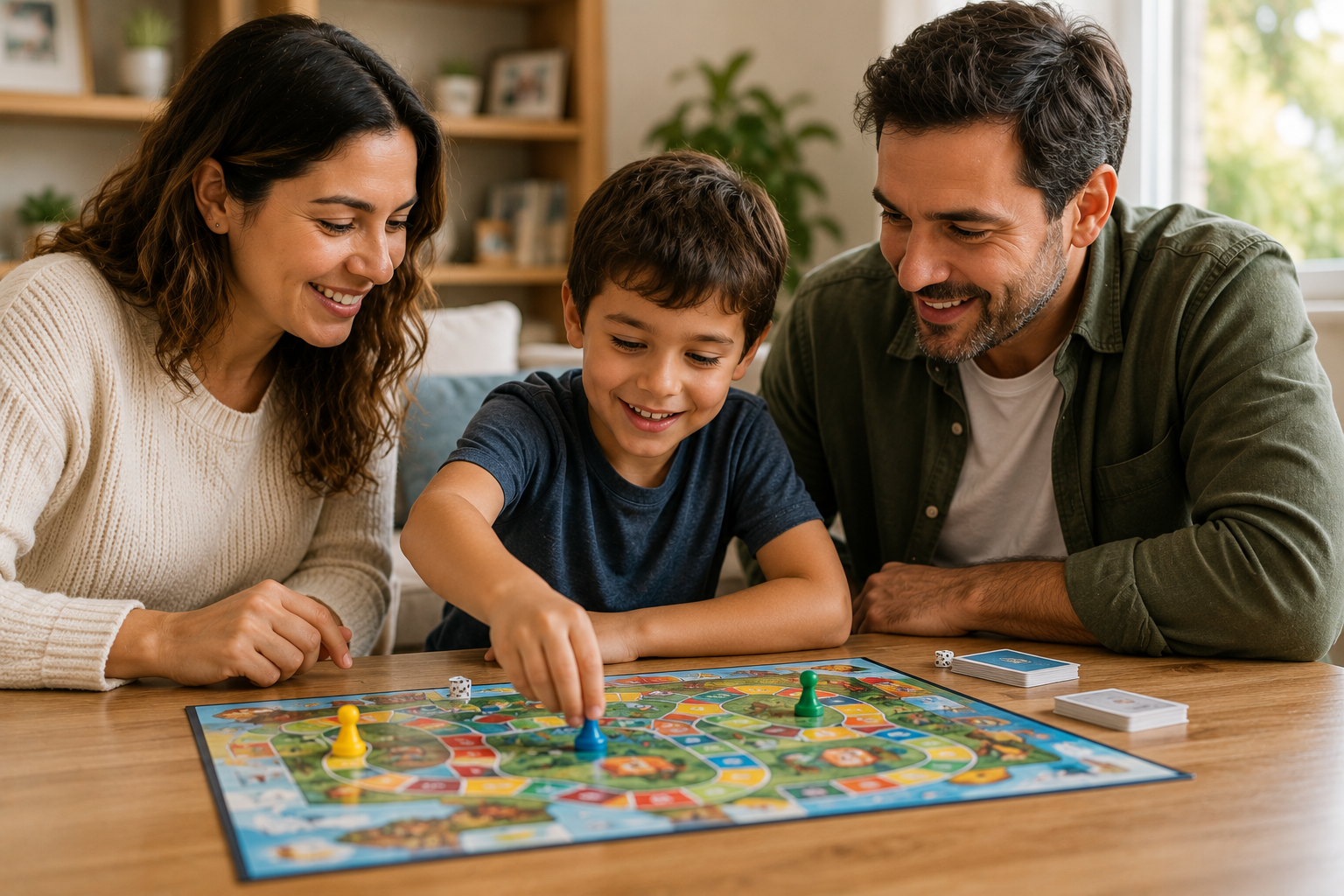
How to Choose Activities That Help Your Child Grow

Parents rarely struggle to find activities. The real challenge is knowing which ones actually help a child grow, and which ones just fill time. Between sports, classes, board games, and screens, it can feel risky to guess what will really support your child’s development.
This guide explains how different kinds of games and activities build specific skills, how to match options to your child’s age and personality, and how to use that insight to choose programs and play that feel worth your time and money.
Why play is so powerful for child development
Play is a child’s natural way to practice life. Through games and active exploration, kids test ideas, manage emotions, move their bodies, and connect with others, all in a low-stakes environment.
Researchers consistently find that regular, high-quality play experiences are linked with stronger language, better problem solving, more flexible thinking, and healthier social skills. When you choose activities intentionally, you are not “wasting time on games.” You are giving your child a safe lab to build skills they will use in school, relationships, and work.
What are cognitive skills in a child?
Cognitive skills are the mental tools kids use to take in information, make sense of it, and act on it. Understanding these makes it much easier to spot child development games that are doing real work behind the scenes.
Key cognitive skills include:
- Attention: Focusing on what matters and ignoring distractions.
- Working memory: Holding small pieces of information in mind while using them, like remembering the rules while taking a turn.
- Cognitive flexibility: Shifting between ideas or strategies when something changes.
- Planning and organization: Thinking ahead, choosing steps, and following through.
- Problem solving: Figuring out what to do when there is no obvious answer.
Games for cognitive development exercise one or more of these abilities. For example, a simple matching game stretches attention, while a strategy board game pushes planning and flexible thinking. When you look at activities through this lens, “fun” and “learning” stop being opposites.
Matching activities to your child’s age and stage
Choosing the right activity starts with what your child can realistically handle and enjoy right now. A good fit challenges them just enough to stay interested without constant frustration.
For preschoolers (roughly ages 3–5), short, concrete activities work best. Think about:
- Simple turn-taking games with only a few rules
- Large, colorful pieces they can move with their hands
- Lots of repetition and quick wins to build confidence
Early elementary children (roughly ages 6–8) can handle more rules and light strategy. They are ready for:
- Games that require counting, basic reading, or simple mental math
- Cooperative goals, like finishing a puzzle together
- Small choices that influence outcomes, such as choosing a card or path
Older elementary children (roughly ages 9–12) can benefit from:
- Rich strategy games with multiple ways to win
- Projects that last across several sessions, such as building, coding, or creative writing programs
- Activities that ask them to reflect on what worked and what did not
Matching activities to stage keeps your child from feeling bored on the one hand, or overwhelmed on the other, which is key to sustained engagement.
Child development games that build thinking skills
Cognitive games for kids do not need to be complicated or labeled “educational” on the box. What matters is how they ask children to think.
Some powerful types of games for cognitive development include:
- Logic and deduction games that ask kids to use clues and rule out options. These promote careful observation and reasoning.
- Planning and strategy games where a child has to think several moves ahead. These practice planning, mental flexibility, and decision making.
- Pattern or sequence games that require ordering steps correctly. These support working memory and understanding of cause and effect.
- Fast-reaction games that reward quick but accurate choices. These sharpen attention and processing speed.
When you review a game or program description, scan for phrases like “strategy,” “solve,” “build,” “sequence,” or “puzzle.” These often signal that an activity will stretch your child’s thinking in a focused way.
If you are browsing an organized activity marketplace, filters for “STEM,” “chess,” “logic,” “coding,” “puzzles,” or “math enrichment” can help you find structured experiences that emphasize these skills.
Games that support social and emotional growth
Some of the most important benefits of play are social and emotional, not just academic. Many parents wonder how board games improve social skills in children, and the answer lies in what kids must do to participate.
Socially rich games ask children to:
- Wait for their turn rather than grabbing attention immediately
- Cooperate toward a shared goal, especially in team or cooperative games
- Read other players’ reactions and adjust behavior
- Handle winning gracefully and losing without meltdowns
- Resolve small conflicts, like disagreements about rules
Games that encourage players to talk about feelings, take on different roles, or imagine someone else’s point of view can also strengthen empathy and emotional awareness. For instance, storytelling games, role-play scenarios, and drama-based programs give children a safe way to explore emotions and practice expressing them in words.
If you are exploring local programs, look for descriptions mentioning teamwork, communication, or social-emotional learning. Those phrases usually reflect an intentional focus on these areas rather than leaving them to chance.
Board games vs video games for child development
Parents often ask whether board games or video games are “better” for development. The reality is more nuanced, and both can have strengths.
Board games tend to naturally support:
- Face-to-face interaction, eye contact, and conversation
- Clear turn-taking and rule-following
- Hands-on manipulation of pieces, which can help some kids focus
Educational video games for kids can support:
- Immediate feedback, which helps children connect actions with outcomes
- Practice of specific cognitive skills, such as spatial reasoning or working memory
- Adjustable difficulty levels that keep kids in a challenged-but-not-overwhelmed zone
The biggest developmental difference usually comes from context, not format. A short, well-chosen digital puzzle that you occasionally play together and talk about can be more constructive than a rushed board game where everyone is tired and snappy.
If you would like to rely more on offline play but keep some screen-based options, consider using video games with clear learning goals as occasional tools, and reserving more time for shared board games, active play, and in-person programs where social and physical skills grow alongside thinking.
Activities for developing fine motor skills in preschoolers
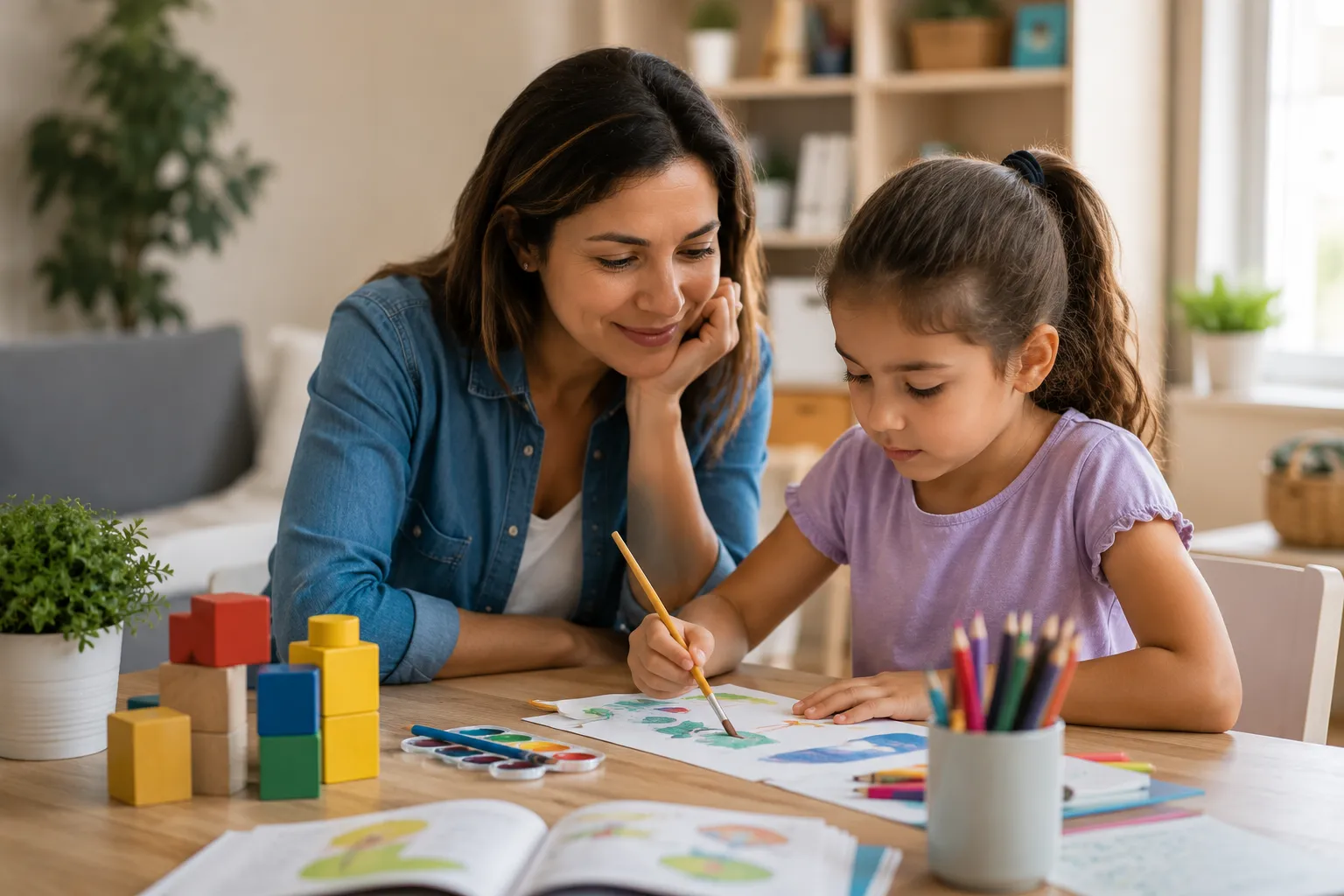
Fine motor skills are the small, precise movements of hands and fingers that children need for everyday tasks like drawing, buttoning, and using utensils. For preschoolers, these skills are still developing and benefit from regular practice in playful ways.
Helpful activities include:
- Simple building sets with larger pieces that still require controlled grasping
- Threading beads or large buttons onto laces
- Using child-safe tweezers or tongs to move small items from one container to another
- Easy arts and crafts like tearing paper, gluing, or squeezing paint bottles
Programs that highlight art, early STEM building, or hands-on sensory play can be especially supportive at this age. When browsing options, check for notes about “hands-on,” “fine motor,” or “manipulatives,” which indicate that small-movement practice is built into the experience.
How to choose activities that fit your child
Once you understand what different games and programs actually build, choosing becomes simpler. Instead of asking, “Is this a good activity?” you can ask, “Is this a good activity for my child, right now?”
A practical way to decide is to look at three factors:
- Current need. Choose one main area to support for the next season: thinking skills, social confidence, physical coordination, or emotional resilience.
- Natural interests. Notice what your child gravitates toward: stories, building, movement, competition, or art. Activities that align with interests are more likely to stick.
- Family logistics. Consider distance, schedule, cost, and how often you can realistically participate.
A well-organized discovery platform makes this easier by letting you filter by age, schedule, location, and focus area, then compare options side by side and enroll when you are ready. Instead of juggling tabs, emails, and paper forms, you can move from “I know what my child needs” to “We are booked” in one place.
FAQ
How do games boost my child’s overall development?
Games create a safe space for children to practice skills before they are needed in real-world situations. Depending on the activity, they can strengthen attention, memory, planning, language, coordination, social skills, and emotion regulation. The key is choosing games that invite active thinking and interaction, rather than only passive entertainment.
Which games are best for improving problem-solving skills in children?
Games that require planning, testing ideas, and adjusting strategy are especially useful. Puzzle games, maze challenges, escape-room style scenarios, and strategy board games all ask children to think ahead and learn from trial and error. Look for descriptions that mention “strategy,” “puzzles,” or “problem solving,” and consider options where you can join in and talk through approaches together.
Are competitive games harmful for young kids?
Competition is not automatically harmful. For many children, it can be motivating and help them learn to manage strong feelings. Problems tend to arise when stakes feel too high, when adults focus only on winning, or when the game is too complex for the child’s stage. For younger kids, cooperative or lightly competitive games where everyone can enjoy small successes often work best.
How much screen-based play is appropriate if I choose educational video games for kids?
The best guideline is to balance screen-based games with plenty of offline play, physical activity, and face-to-face interaction. Educational games can be a helpful tool in moderation, particularly when you choose options that clearly build skills and occasionally join your child to talk about what they are doing. If most of your child’s free time involves screens, consider gradually exchanging some of that time for board games, outdoor activities, or local programs.
How can I tell if an activity or class is high quality?
Signs of quality include clear learning goals, age-appropriate expectations, trained staff, and a structured but warm environment. Transparent information about schedules, safety policies, and what kids actually do during sessions also matters. Reviews from other parents can give helpful insight into whether a program follows through on its promises.
The best activity is one that matches your child's interests, challenges them appropriately, and keeps them excited to come back. Whether it's art, sports, music, STEM, sensory play, or outdoor adventures, every positive experience helps build confidence, curiosity, and lifelong skills. By choosing activities intentionally and revisiting those choices as your child grows, you'll create opportunities for learning that feel just as fun as they are meaningful.